
Kenya, Israel launch goat and sheep training centre in Kiambu
The facility will train farmers in feed production, animal nutrition and breeding, with pellet-making equipment to support feed preservation and dry-season supply.
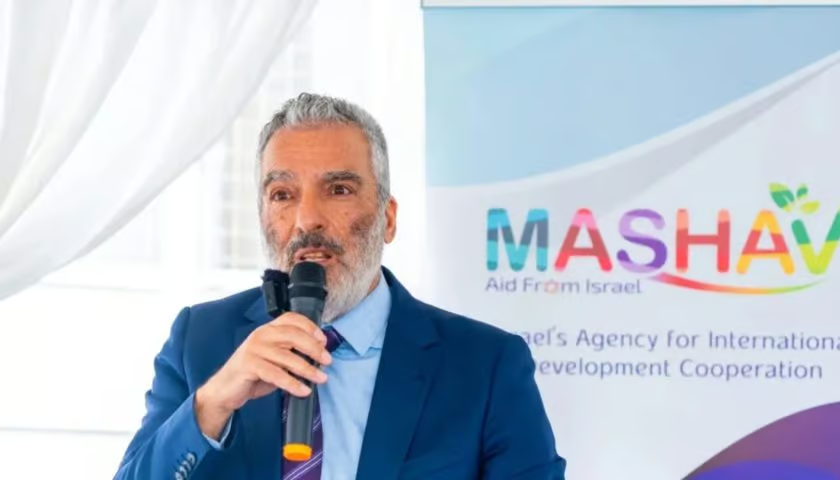
KENYA – Kenya and Israel have launched a goat and sheep training centre in Kiambu County to help livestock farmers improve animal nutrition, breeding and productivity through practical training and modern agricultural technologies.
Located at 27 Farms, the facility was launched through a partnership between the farm and Israel’s Agency for International Development Cooperation (MASHAV).
It will provide training in dairy goat and sheep farming, animal genetics and feed production, including the use of feed-processing equipment to improve livestock nutrition and feed availability.
A feed pellet-making machine provided through MASHAV will enable the farm to combine different ingredients into pellets designed to provide balanced nutrition for goats and sheep.
The equipment is also expected to support feed production for farmers in surrounding communities.
MASHAV representative and agricultural expert Eitan Hatzor said animal feeds account for an estimated 60 to 70% of livestock production costs, making efficient feed management important to farm profitability.
The facility is expected to help farmers prepare and preserve feed for periods when pasture and other fodder resources become scarce.
Feed production and dry-season management

Jacqueline Gathura, Director of 27 Farms, said the farm grows maize for silage, purchases additional fodder and is experimenting with lucerne cultivation to improve feed availability.
Turning feed ingredients into pellets would make it easier to preserve feed for use during dry seasons, when shortages are common.
She demonstrated the farm’s zero-grazing system, in which animals are fed within the farm rather than left to roam in search of pasture.
Gathura urged farmers to consider alternatives to livestock systems that depend heavily on rainfall, particularly as changing weather patterns affect feed availability.
The farm keeps dairy goats, Boer goats for meat production and sheep, including crosses developed from indigenous Red Maasai sheep and Meatmaster breeding stock from South Africa.
Building livestock breeding capacity
Speaking during the launch, Israeli Ambassador to Kenya Gideon Behar described the facility as a milestone in agricultural cooperation between the two countries.
“I think this is another milestone in the very long cooperation between Israel and Kenya in the field of agriculture,” Behar said.
The centre will also support knowledge transfer in animal genetics and selective breeding.
Behar disclosed that Kenya’s Ministry of Agriculture was considering introducing the Assaf sheep breed from Israel, which he said could produce about five litres of milk a day.
Israel is expected to provide technical assistance for the proposed introduction.
Peter Njenga, Deputy Director of Livestock Production at the State Department for Livestock Development, said improving animal genetics was essential to raising productivity and meeting growing food demand.
“Conservation of our animal genetics is very, very important in this country because it is through conserving and improving on those genetics that we are able to increase the production of those animals,” he said.
He cautioned that genetic improvement should not come at the expense of indigenous breeds and their valuable traits.
Gathura said the centre hopes to begin training farmers early in 2027. The organisers did not disclose the expected number of trainees, participation costs or the full training schedule.
Sign up HERE to receive our email newsletters with the latest news updates and insights from Africa and the World, and follow us on our WhatsApp channel for updates.

Be the first to leave a comment