
Soybean
-

Innovative soy chain set to cut broiler feed emissions by more than a third
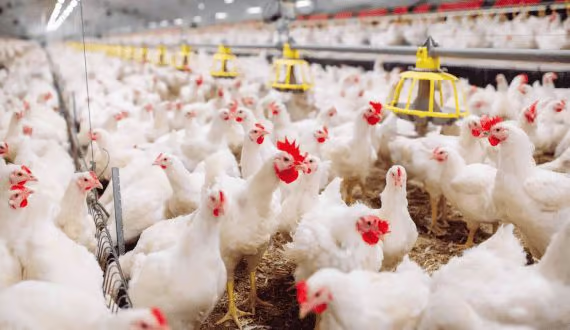
The initiative targets one of the biggest contributors to poultry emissions: feed production, which accounts for about 78% of a broiler’s total greenhouse gas footprint.
-
Bangladesh commits US$1.25B to U.S. soy in landmark deal
Soybean meal is a key component in animal feed, making the deal a significant boost for the nation’s food security and livestock productivity.
-
FEFAC warns of looming soy supply chain disruptions under EU deforestation rules
According to the federation, market instability has already emerged following conflicting signals about potential European Union Deforestation Regulation (EUDR) postponements.
-
Bunge and BKP expand blockchain partnership for deforestation-free soy supply
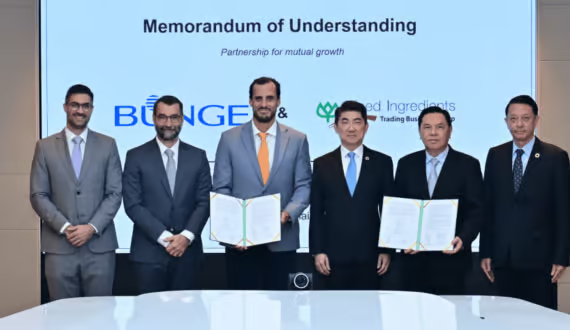
The partnership’s expansion in 2025 will include comprehensive trade agreements on upstream operations, like procurement of key agricultural raw materials, to downstream CP animal feed plants.
-
IFAD, Partners launch pilot to boost maize and soybean value chains in Rwanda
Soybeans outperform traditional beans on average, making them an important driver of income diversification for rural households.
-
KMZ Industries to install Ukraine’s first soy protein concentrate plant
Soy protein concentrate is increasingly valued in both human nutrition and animal feed markets for its high-protein and low-carbohydrate profile.
-
ADM announces closure of Bushnell facility to optimize soy protein network amid recovery efforts
According to ADM, the move aims to consolidate its soy protein operations into a “more efficient global network.”
-
EU approves new GM soybean for food and feed use
Developed by Beijing DaBeiNong Biotechnology Co. Ltd., DBN9004 has been genetically engineered to tolerate two commonly used herbicides.
-
China opens market to Ethiopian soybean meal in strategic trade shift
By reducing its reliance on traditional suppliers such as Brazil, Argentina, Russia, and Uruguay, China aims to secure more stable and diverse feed protein sources
-
ADM to close South Carolina soybean plant amid cost-cutting measures
This facility, the smallest of ADM’s U.S. soy processing plants becomes the first to close amid a recent contraction in the biofuels sector.